The loyalty card in the phone
Customers come once… and never come back?
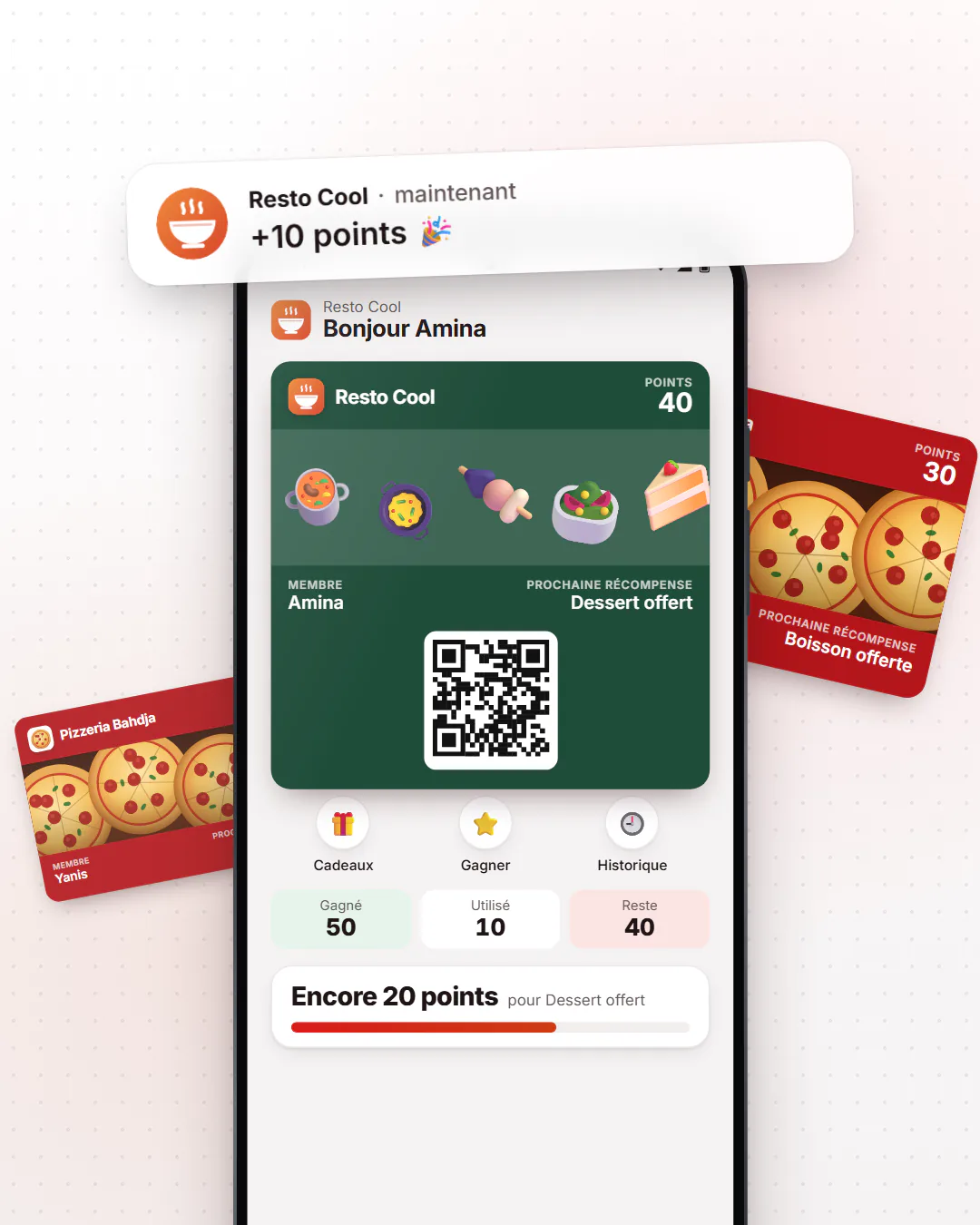
Wafly puts your loyalty card in their phone: they collect points, win rewards, and come back to you.
- ✓ 0 DA to start
- ✓ You only pay when a customer comes back
- ✓ Never more than 3,000 DA a month
Why don’t customers come back?
They liked it, paid, and left
Nothing reminds them of you. Next time, they walk into whichever shop is on their way.
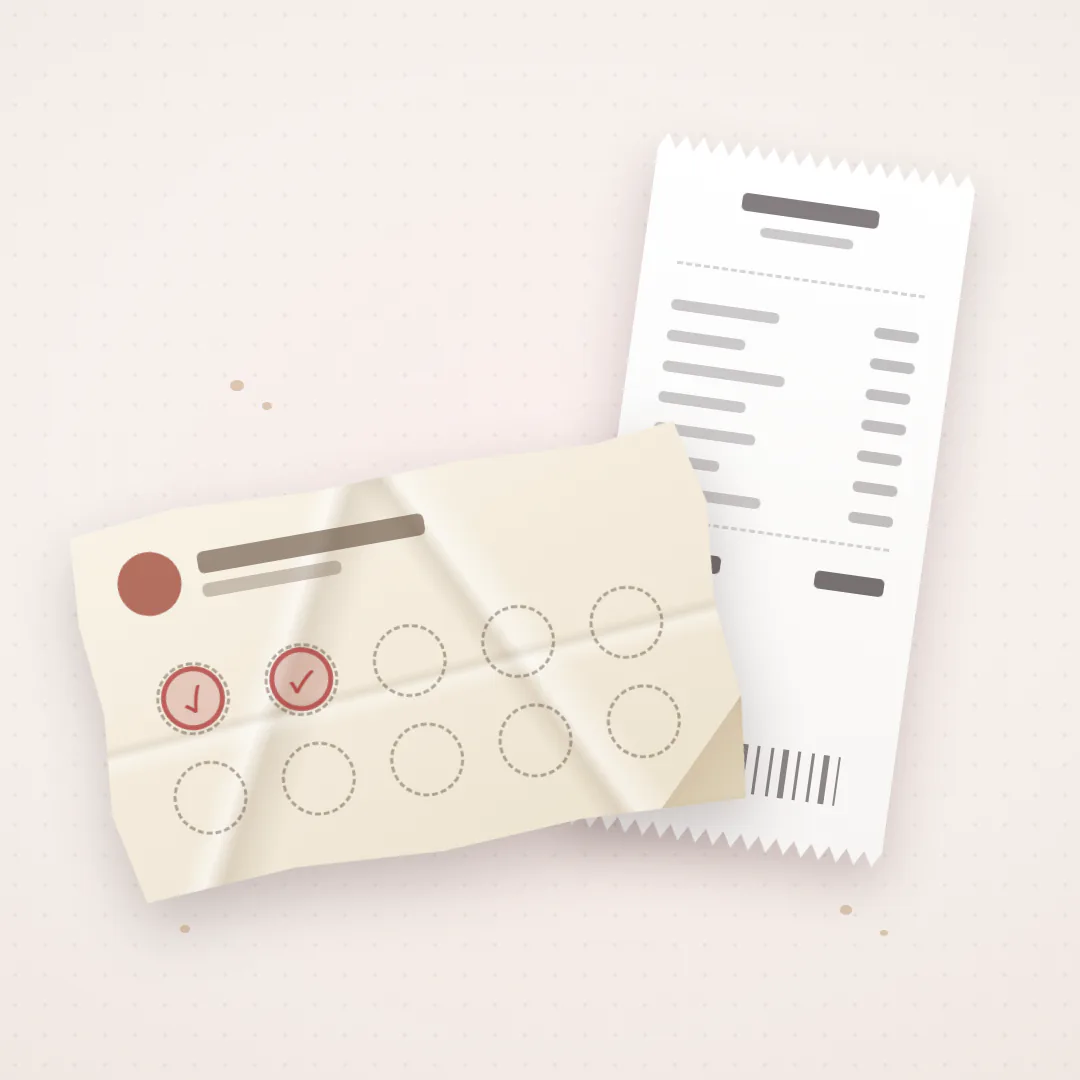
The paper card stays at home
It gets lost, forgotten. The Wafly card is in their phone, always with them.
The first in the neighbourhood wins
The day your neighbour gets a loyalty card, customers will go to them. Better that it’s you, first.
Wafly: the loyalty card in your customer’s phone
No app, no paper. The customer scans your QR code and the card lands in their phone in seconds.
How does it work? Three steps
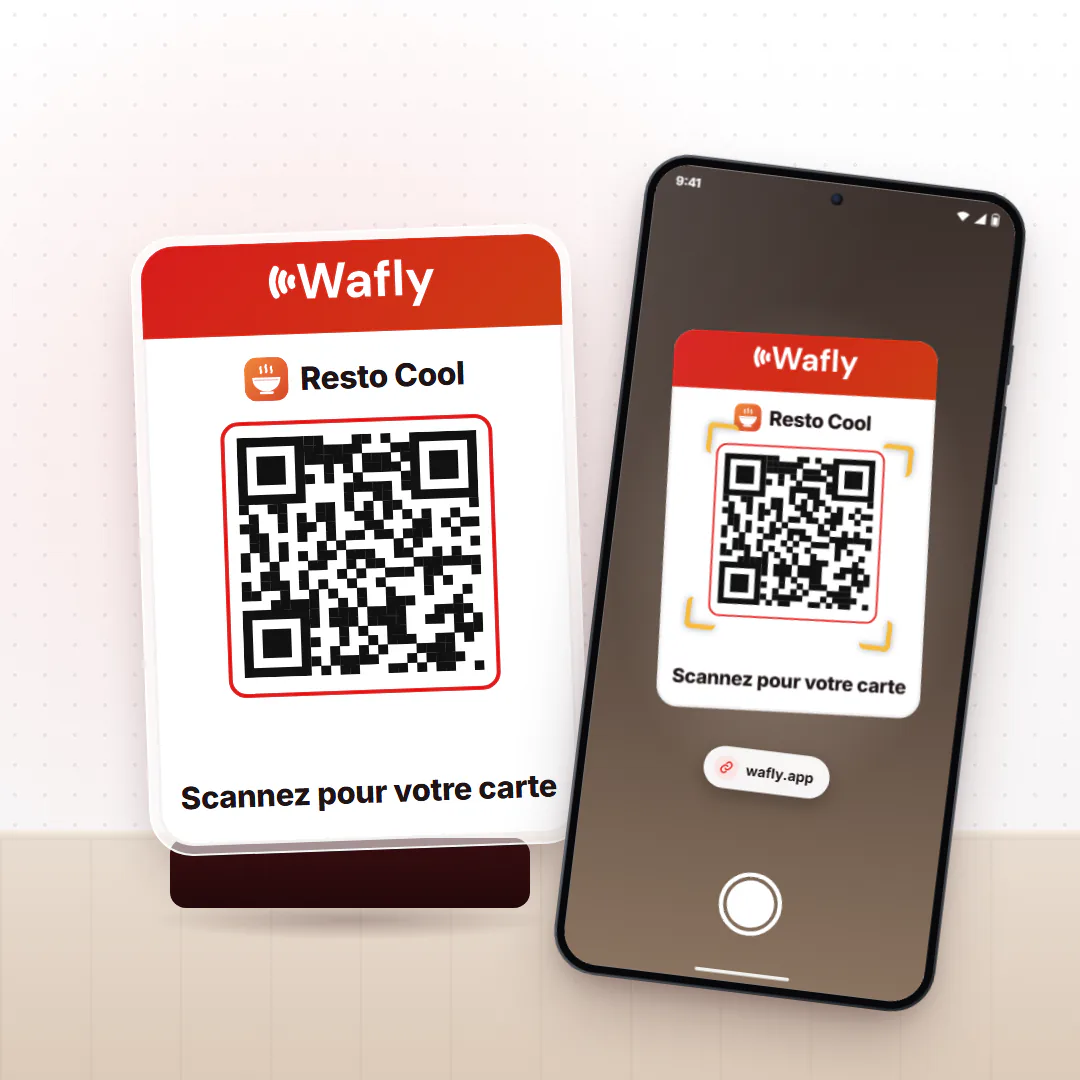
The customer scans the QR
On the counter. They type their first name, that’s it: nothing to pay, nothing to download.
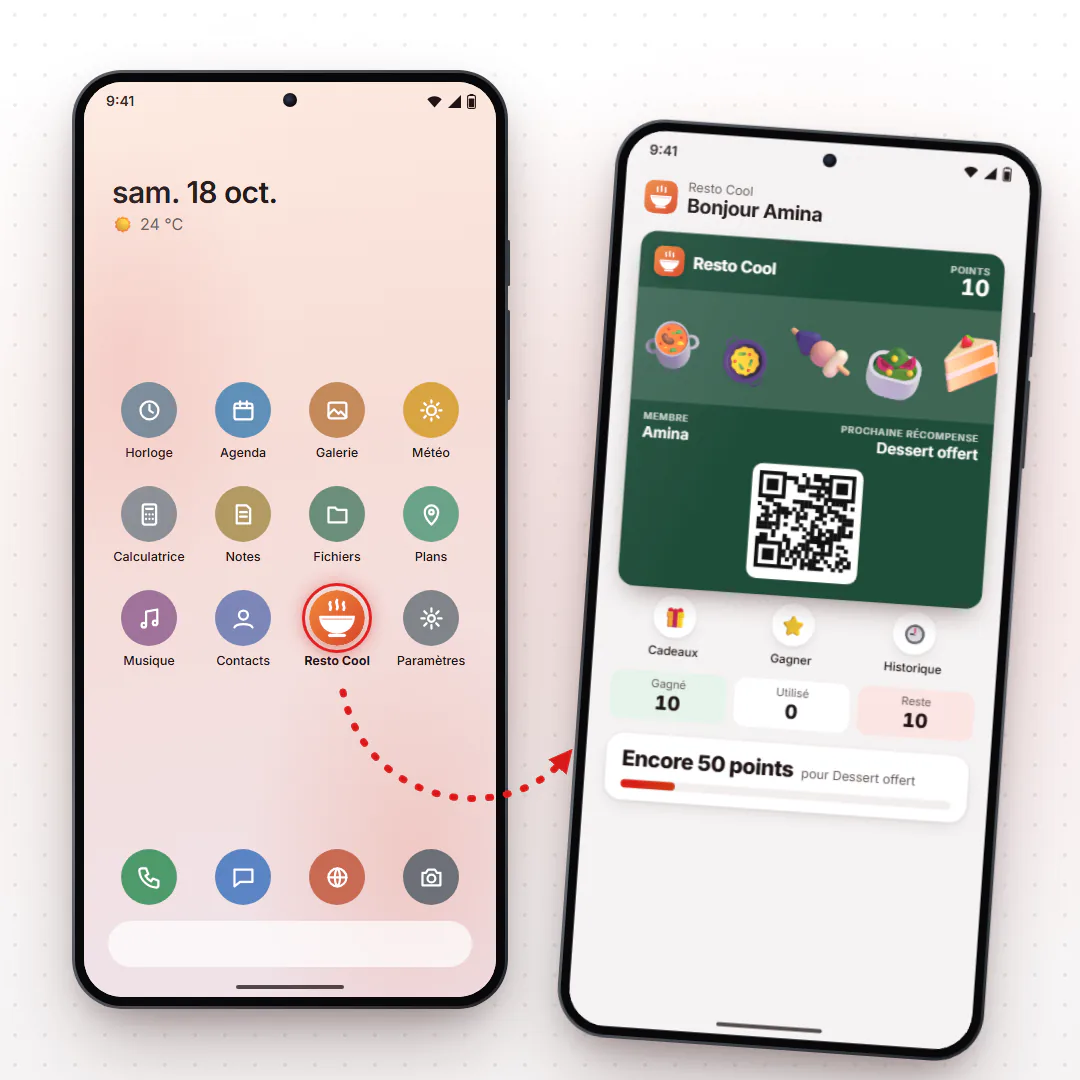
The card in their phone
It opens like an app, with your logo. They see their points and rewards.
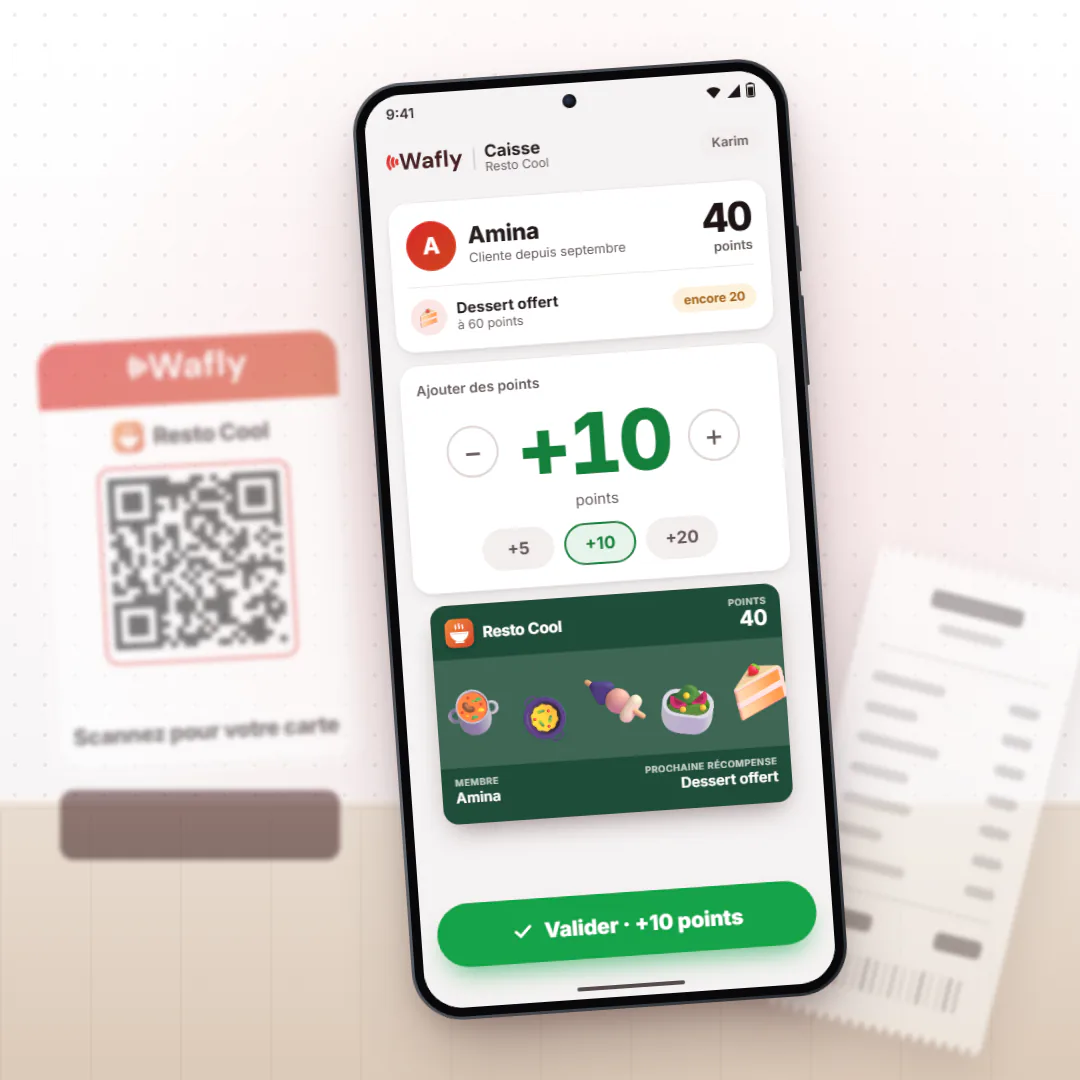
Points at the till
At every visit, you add their points in a second. The reward gets closer: they come back for it.
What you get
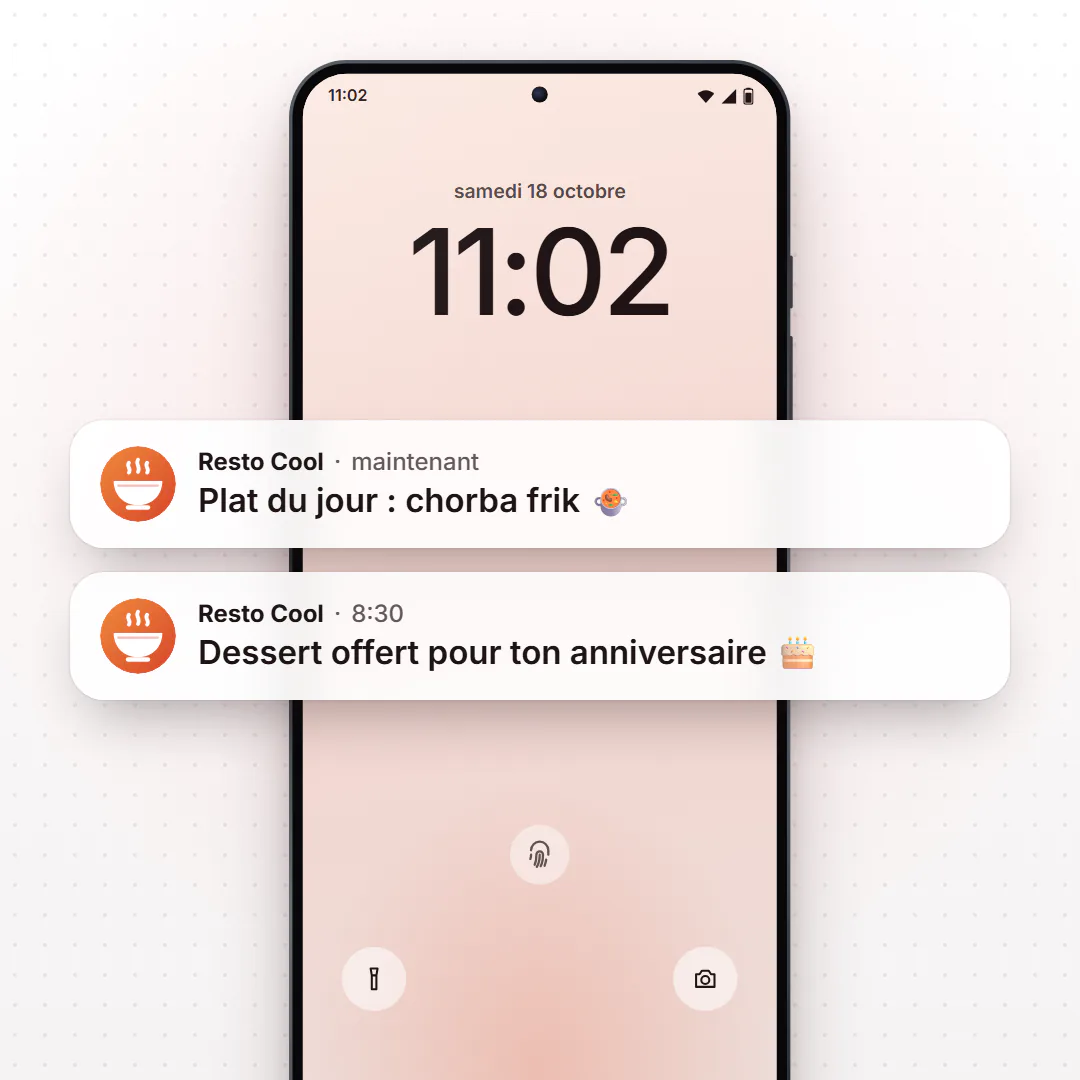
Your offers as notifications in their phone
Dish of the day, weekend offer, their birthday: you send it, they read it, they come.
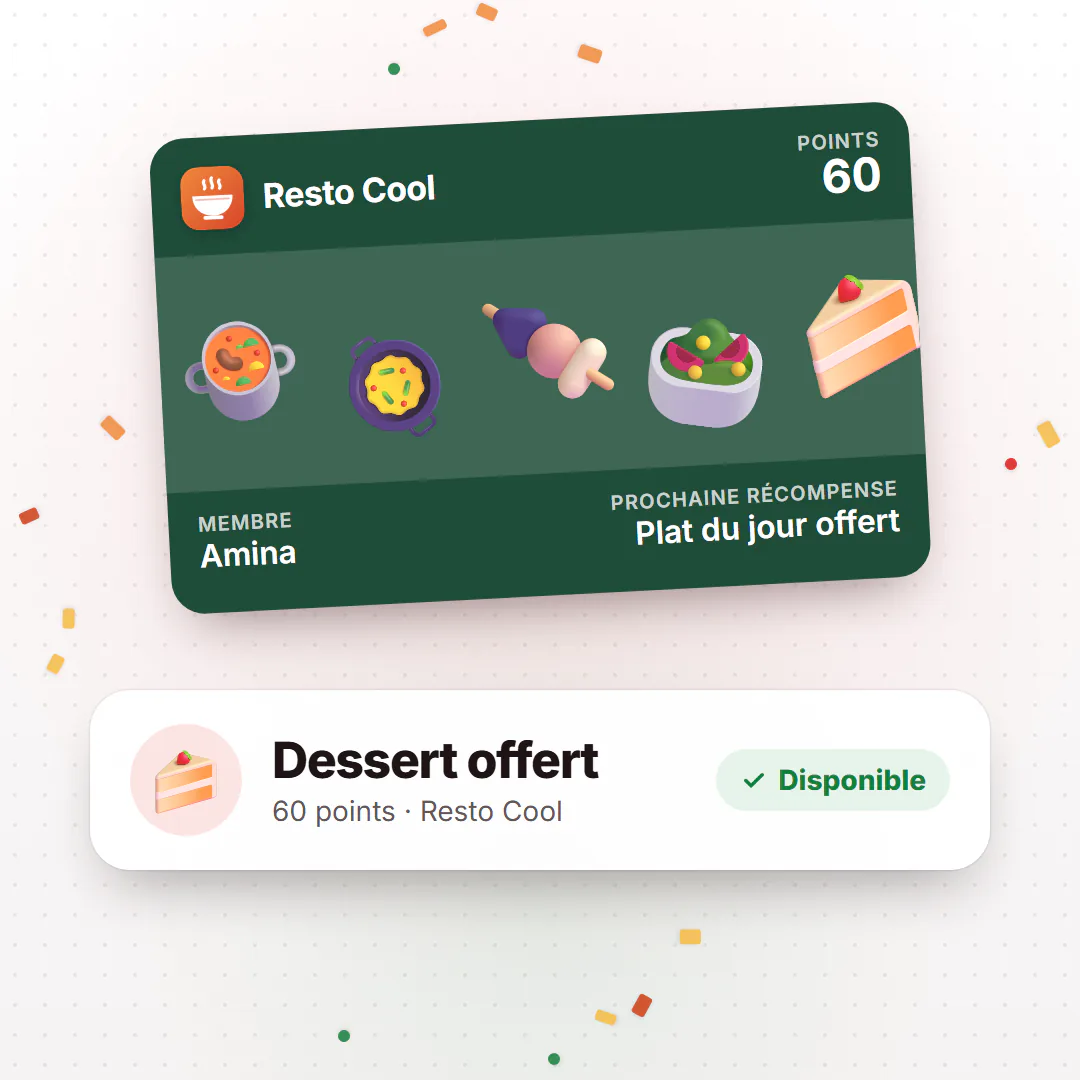
Rewards that bring them back
Free dessert, free drink, free breakfast: you choose. The customer sees what’s left to earn.
You take no risk
You pay for results
No returning customer? Nothing to pay. Sign-ups are never counted.
Never more than 3,000 DA
Even if the whole neighbourhood comes back this month, the bill stops at 3,000 DA.
Stop whenever you like
No subscription, no notice. Your customers keep their card and points.
How it works
We set up your card
We prepare your loyalty card with you and put the QR code or NFC sticker on your counter. 0 DA, no subscription.
Your customers sign up: never counted
The visit where a customer gets their card is free. You never pay for new customers.
A customer comes back: a small price
From the next visit on, each returning customer costs your tier price, at most once a day. The monthly total never exceeds 3,000 DA.
What is counted, what is not
- A customer signs up and gets their cardFree
- A registered customer comes back another dayCounted
- The same customer comes back the same dayFree
- A customer registered at another business visits you for the first time (that is a sign-up with you)Free
- Visits after the 3,000 DA monthly cap is reachedFree
What shop owners ask us
What if it does not work for me?
Then you pay nothing: with no returning customers, nothing is counted. You try it with no risk.
Not all my customers have a smartphone
No problem: at the till, you can also find a customer by phone number. Those with a smartphone also get the card in their phone.
I do not have time
Ten minutes to set everything up, with us. After that, a scan at the till takes a few seconds.
I am not comfortable with technology
We set everything up with you and show you how it works. Your customers install nothing.
Do I pay when a customer signs up?
No. The visit where a customer gets their card is never counted. Only their later visits count, starting the next day.
What is the most I can pay?
3,000 DA a month, whatever happens. Once that amount is reached, every visit for the rest of the month is free.
How do I pay?
You start for free (0 DA). Then you pay your credit according to what you used, that is the customers who came back. You can also top up in advance: in cash, with BaridiMob or by CCP transfer. Each payment gets you a voucher (numbered receipt). You can see at any time how many returns have been counted.
Your price in 10 seconds
Pick your type of shop, see your price, leave your number. We call you and set everything up with you.
1. Tap your business
Tap your business above: your price shows up here.
Illustrations: examples, not real shops.